
Commercial and construction
40 Yard Dumpster Rental in Brandon, FL
The largest container we run, and a specialist rather than a general-purpose box. It is for high-volume, low-density material: a retail fit-out, a screen enclosure or pool cage rebuild, office furniture, ceiling grid, siding and packaging. It needs the most room of anything we place and the flattest, firmest ground on the property, and it is the wrong answer for anything heavy.
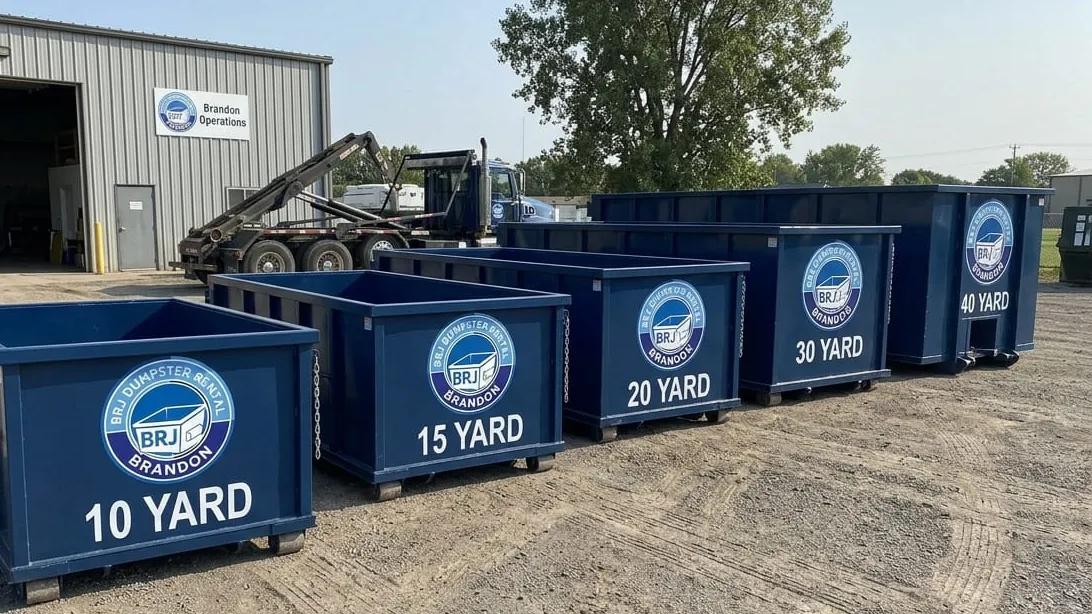
A 40 yard roll-off runs around twenty-two feet long, eight feet wide and roughly eight feet tall, which is the most volume we can put on one truck. Everything about it follows from that height: material goes in over a tall wall, so it wants a loading sequence, and the container wants genuine room around it. On a commercial site or a construction lot that is straightforward. On a suburban driveway it usually is not, and we will say so before we load.
- Capacity40 cubic yards
- Footprint22 ft x 8 ft x 8 ft
- Weight allowance5 – 6 tons
- Holds about~12 – 16 pickup truck loads
Why people choose the 40 yard
The 40 is a volume tool, and it only makes sense when the material is light. That is why it lives mostly on commercial and construction jobs. A retail fit-out or a tenant change along the Brandon Boulevard corridor produces shelving, checkout counters, ceiling grid, carpet tile, signage and the previous concept’s millwork, all of it bulky and none of it dense. An office clear-out produces cubicle panels, desks and task chairs, which is close to pure air by weight. A construction job producing siding, soffit, packaging, banding and framing offcuts fills volume steadily without ever approaching a payload limit. In all of those cases the 40 does something no smaller box can: it lets the work run without stopping for a swap. On a site with trades booked in sequence, that is worth more than the difference in price, because a full container on a Tuesday afternoon stops more than one person working, and a pile that starts spreading across a lot never gets smaller on its own.
There is one residential job in Brandon that genuinely warrants a 40, and it is the screen enclosure. Pool cages and lanai enclosures are aluminum frame, screen and spline, and they are the bulkiest light material a house here produces. A cage taken down after storm damage or a rebuild will out-volume a 30 without coming close to its weight limit, and the frame does not stack tidily however carefully you work. The same applies to a large carport, an awning system or a whole-property clearance where fencing, screen and outbuilding material all come out at once. Beyond those, a 40 on a residential driveway is usually the wrong tool. It needs the most room of anything we place, it is loaded over an eight-foot wall, and for an ordinary whole-house declutter a 30 does the same work with less driveway and a lower rim to lift over. We would rather talk you down a size on the phone than turn a truck around in your street.
What must not go in a 40 is weight, and the reason is simple physics rather than policy. A container has a lawful payload, and dense material reaches it long before the sides fill. Put a patio slab, block, pavers, tile in a mortar bed or roof tile in a 40 and you produce a container that cannot legally leave the property, which costs a morning and fixes nothing. Soil and fill are worse, because they arrive faster than anyone expects. So the rule on this box is that everything going in should be material you could carry in your arms. Anything you would rather roll or wheel belongs in a 10 loaded flat. Hillsborough reinforces this at the scale: the county burns most of its garbage, separates processable from non-processable material and charges twice the posted rate on a mixed load, so a light box with rubble tipped into it is expensive twice over: once on the surcharge, and again if the load has to be worked over before it can move.
Placement is the other constraint, and on this size it is the one that decides whether the job happens at all. The 40 needs the flattest, firmest ground on the property with genuine room around it for the truck to line up, back and work the hoist. In Brandon that usually means a commercial lot, a service lane or a construction site rather than a residential drive, and the surface question is sharper than on a smaller box because the loaded weight is spread across the same four wheels. Myakka fine sand is very poorly to poorly drained with a water table at depths of less than 18 inches for one to four months in most years, so an unpaved staging area in the rainy season is not a load-bearing surface. We want hard standing wherever we can get it, plywood under the wheels and rails regardless, and a walked approach before anything comes off the rails. If the room is not there, we will tell you and bring two 30s instead.
Good fit for
- Retail fit-outs and tenant changes
- Office furniture and cubicle clear-outs
- Ceiling grid, carpet tile and millwork
- Screen enclosure and pool cage rebuilds
- Siding, soffit, fascia and roof panel
- Construction packaging, banding and offcuts
- Large carports, awnings and outbuildings
- Whole-property clearance of light material
Not the right size for
- Concrete, block, mortar and pavers
- Roof tile and tile set in a mortar bed
- Soil, sand, sod and fill
- Anything soaked through by the rainy season
- Ordinary whole-house declutters
- Any driveway without real room around it
Will it fit?
This is the container that gets refused on placement more than any other, and it is better to find that out on the phone than on delivery day. It runs around twenty-two feet long, eight feet wide and roughly eight feet tall, and it needs the most room of anything we place: about 60 feet of straight approach at a minimum, roughly ten and a half feet of working width, 20 feet or more of overhead clearance for the hoist, and real space around the box for loading at height. On a commercial lot, a service lane or a construction site that is normally fine. On a suburban Brandon driveway it frequently is not, and a 30 with the same footprint but lower sides does the job better. The ground is the other test. Myakka fine sand is very poorly to poorly drained with a water table under 18 inches for one to four months in most years, so an unpaved staging area in the wet season will not carry a loaded 40. Hard standing where we can get it, plywood under the wheels and rails regardless, and a walked approach first. Florida works from NFPA 1 rather than the International Fire Code, and we keep containers clear of the building, the eaves, the meter and the condenser, and clear of the fire lane. If any part of it will sit in a county street or swale, that is right-of-way and the desk is Development Services on (813) 272-5600.
Before delivery, move cars and bins, mark irrigation heads and septic lids, and tell us about new concrete, soft or made ground, a low spot that holds water after an afternoon storm, or a service drop hanging under a live oak. Myakka fine sand drains poorly and the water table sits under 18 inches for one to four months in most years, so in the rainy season a lawn or an unpaved verge is not a load-bearing surface — the driveway is. Plywood goes under every wheel and under both rails as standard. Our delivery and driveway protection guide and our Brandon placement and permit guide cover the rest.
Compare all five sizes
| Size | Footprint | Weight allowance | Holds about | Best for |
|---|---|---|---|---|
| 10 Yard Dumpster | 12 ft x 8 ft x 3.5 ft | 2 – 3 tons | ~3 pickup truck loads | Concrete, block, roof tile and wet debris — and more than the County’s whole free yearly bulky allowance. |
| 15 Yard Dumpster | 16 ft x 8 ft x 4 ft | 2 – 3 tons | ~4 – 5 pickup truck loads | A single room, a small tear-off, or a two-car garage cleared to the walls. |
| 20 Yard Dumpster | 22 ft x 8 ft x 4.5 ft | 3 – 4 tons | ~6 – 8 pickup truck loads | A whole-house declutter — the Brandon default — or a multi-room remodel. |
| 30 Yard Dumpster | 22 ft x 8 ft x 6 ft | 4 – 5 tons | ~9 – 12 pickup truck loads | A large remodel or a full estate cleanout, garage and lanai included. |
| 40 Yard Dumpster | 22 ft x 8 ft x 8 ft | 5 – 6 tons | ~12 – 16 pickup truck loads | Commercial gut jobs and construction — it needs the most room to set down. |
Still not sure? Describe what you are throwing away and we will size it on the phone in two minutes. Getting it wrong costs us more than it costs you, so we have every reason to get it right. Call (813) 773-2486.
Book a 40 yard
Flat rate including delivery, pickup, rental period and disposal. Same-day where we can.
(813) 773-2486Other sizes
Popular services
All sizes
Compare our five roll-off containers
10 Yard Dumpster
Concrete, block, roof tile and wet debris — and more than the County’s whole free yearly bulky allowance.
View this size → 15yd³15 Yard Dumpster
A single room, a small tear-off, or a two-car garage cleared to the walls.
View this size → 20yd³20 Yard Dumpster
A whole-house declutter — the Brandon default — or a multi-room remodel.
View this size → 30yd³30 Yard Dumpster
A large remodel or a full estate cleanout, garage and lanai included.
View this size → 40yd³40 Yard Dumpster
Commercial gut jobs and construction — it needs the most room to set down.
View this size →40 Yard Dumpster FAQs
When is a 40 actually the right box?
When the material is high in volume and low in density, and when there is real room to place it. That means commercial fit-outs, office clear-outs with cubicle panels and furniture, ceiling grid and carpet tile, construction packaging and siding, and on the residential side a screen enclosure or pool cage rebuild, which is the bulkiest light material a Brandon house produces. What it is not right for is an ordinary whole-house declutter: a 30 has the same footprint, lower sides and enough capacity. Describe the material and the site when you call the yard on (813) 773-2486 and we will tell you honestly whether you need this one.
Why can I not put concrete in it?
Because the limit is weight and the 40 has no more payload than a smaller box. Concrete, block, mortar, pavers, tile in a mortar bed and roof tile are several times denser than the material this container is designed for, so they reach a lawful payload while the sides are nowhere near full and you end up with a container that cannot legally be moved. Hillsborough adds a second reason: the county burns most of its garbage, splits processable from non-processable material at the scale and charges twice the posted rate on mixed loads. Dense material belongs in a 10 yard loaded flat and low, running alongside the big box.
Will it fit on a residential driveway?
Sometimes, but far less often than people hope, and we would rather say so before delivery day. It is around twenty-two feet long and roughly eight feet tall, and beyond the footprint it needs real room around it to load at height and for the truck to work the hoist: about 60 feet of straight approach, ten and a half feet of width and 20 feet or more of overhead clearance. On a Brandon lot the live oaks and the service drop are usually what rule it out. For nearly every household job a 30 is the better answer, with the same footprint and a lower wall to lift material over.
How do I load an eight-foot box efficiently?
With a sequence, because the top few feet go in over a tall wall. Put the heaviest and most awkward pieces in first while you can still place them properly, then build outward and upward with the light bulky material. Panels, frame and grid go in flat and layered rather than thrown, furniture goes upright against the walls, and everything stays below the fill line. On a commercial job it is worth staging material near the container rather than carrying it piece by piece, and worth keeping cardboard and packaging separate from anything dense so the load stays a clean one at the scale.
What about placement on a commercial site?
We plan the set around the trading day rather than around the truck: early drops, cones out, fire lanes kept clear and a route that does not cross a dock apron in use. The 40 needs the firmest ground on the site, and in the rainy season an unpaved staging area is not it, because Myakka fine sand is very poorly to poorly drained with a water table under 18 inches for one to four months in most years. If any part of the container will sit in a county street or swale, that is right-of-way and the desk is Hillsborough County Development Services on (813) 272-5600, with a separate Temporary Traffic Control permit where traffic has to be interrupted.
Services
What people put in a 40 yard
Residential Dumpster Rental
Driveway placement for the garage, lanai and shed cleanouts a slab-built house produces.
Learn more →Commercial Dumpster Rental
Containers for businesses and contractors — the County does not collect construction debris.
Learn more →Construction Dumpster Rental
Mixed C&D in one roll-off, with next-day swap-outs across Hillsborough County.
Learn more →Roofing Dumpster Rental
Weight-rated cans sized by squares and layers, tarped against the afternoon rain.
Learn more →Roll-Off Dumpster Rental
10, 15, 20, 30 and 40 yard roll-offs across Brandon and Hillsborough County.
Learn more →Same-Day Dumpster Rental
Call before the cut-off and we can usually get a container to you this afternoon.
Learn more →Talk to a real person
Need a 40 yard in Brandon?
Tell us what you are clearing out and we will tell you the right size and the flat price to put it in your driveway. No forms, no waiting on an email — just call and we will sort it out in a couple of minutes.
Serving Brandon, Hillsborough County and the Tampa Bay area · Mon–Fri 6:30am–5pm, Sat 7am–1pm